Blog
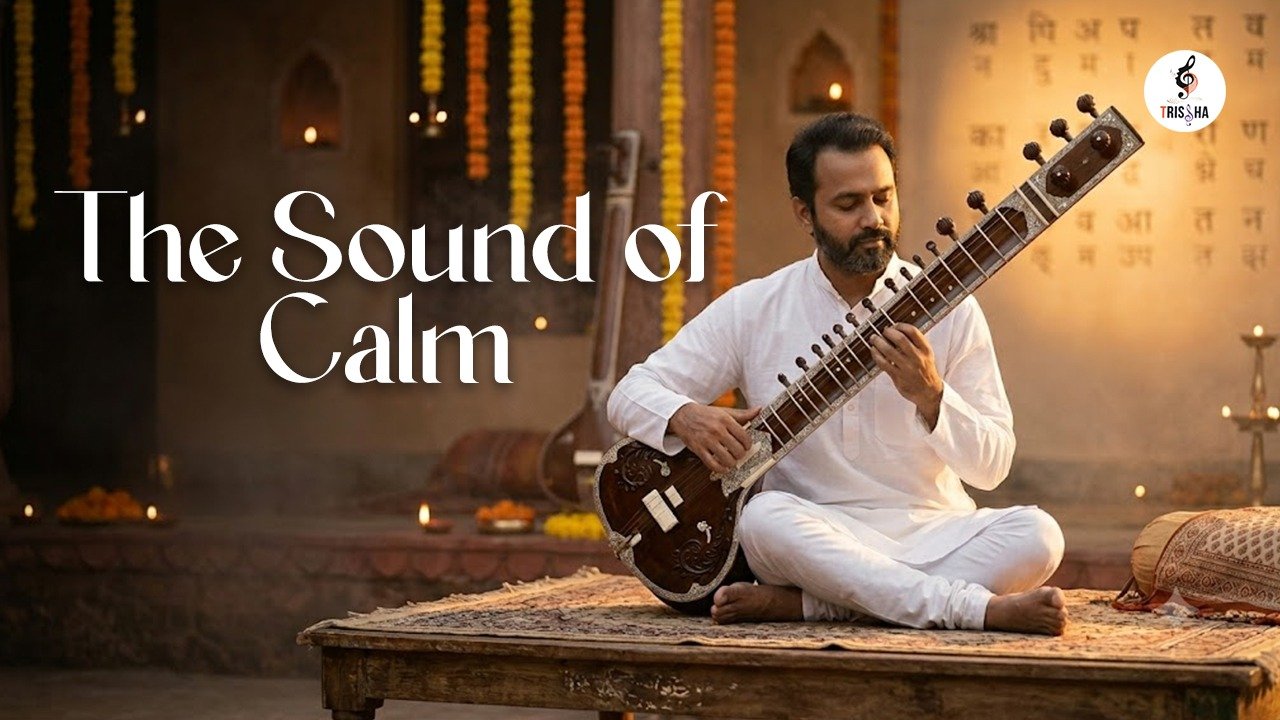
The Sound of Calm: How Indian Classical Music Keeps You Tension Free
In a world that rarely pauses, tension has become a quiet companion for most people. Deadlines, responsibilities, and the relentless pace of daily life leave little room for the mind to rest. And yet, for centuries, one art form has offered exactly that rest — not as a remedy invented in a laboratory, but as a gift passed down through generations of devoted musicians. Indian classical music is that gift, and its power to dissolve tension is neither mystical nor exaggerated. It is real, rooted, and worth understanding.
A Living Tradition Built on the Science of Sound
Indian classical music is one of the oldest musical systems in the world. Rooted in the ancient texts of the Samaveda and developed over millennia through two principal schools — the Hindustani tradition of North India and the Carnatic tradition of the South — it is a sophisticated and deeply structured art form. At its heart is the concept of the raga, a melodic framework built on specific notes, ascents, descents, and emotional colours. Each raga is assigned a time of day or season, because our ancient masters understood that certain combinations of sound interact with the human nervous system in precise ways.
This is not abstract philosophy. Modern science has begun to validate what musicians have always known. Research in music therapy has shown that listening to slow, structured melodic patterns reduces the production of cortisol, the hormone most directly associated with stress. The sustained, unhurried progression of a morning raga such as Bhairav, or the quiet depth of an evening raga like Yaman, creates conditions in the body that mirror deep relaxation.
The Raga as a Reset for the Mind
When you sit with Indian classical music — whether it is a sitar recital, a vocal khyal performance, or a flute composition — something shifts. The mind, which is ordinarily pulled in several directions at once, begins to follow a single thread. This is not passive listening. A raga unfolds slowly and deliberately. The artist explores the notes with care, establishing mood before melody, silence before sound. The listener, almost without realising it, is drawn into a state of focused attention that quiets internal noise.
This quality of sustained focus is remarkably similar to what is achieved through meditation. In fact, many practitioners of yoga and mindfulness recommend Indian classical music as a complement to meditative practice precisely because it guides the mind towards stillness without demanding effort from the listener.
Ragas That Heal
Certain ragas carry well-documented therapeutic associations. Raga Bhairavi, often performed at the close of a concert, is said to draw out accumulated sorrow and leave the listener emotionally cleansed. Raga Darbari Kanada, associated with Miyan Tansen, is known to induce deep calm and has been used in palliative care settings in several Indian hospitals. Raga Kafi, with its gentle minor quality, eases emotional restlessness. These are not claims made lightly. They reflect centuries of observation and, increasingly, the findings of researchers studying the connection between music, the brain, and the body.
Accessible to Everyone
One need not be a musician or a scholar to benefit from Indian classical music. The experience of sitting quietly and allowing a raga to play — during the early morning, at dusk, or before sleeping — is available to anyone. Many musicians now make their recordings widely accessible through digital platforms. The investment required is only time and a willingness to listen without distraction.
A Tradition That Cares for Its Listeners
What makes Indian classical music uniquely powerful is that it was never designed merely to entertain. It was designed to transform. The rishi-musicians who codified the ragas believed that sound, properly employed, could heal the body, calm the mind, and elevate the spirit. That belief has endured because the music itself continues to deliver on that promise, generation after generation.
In a tense world, that is no small thing.