Blog
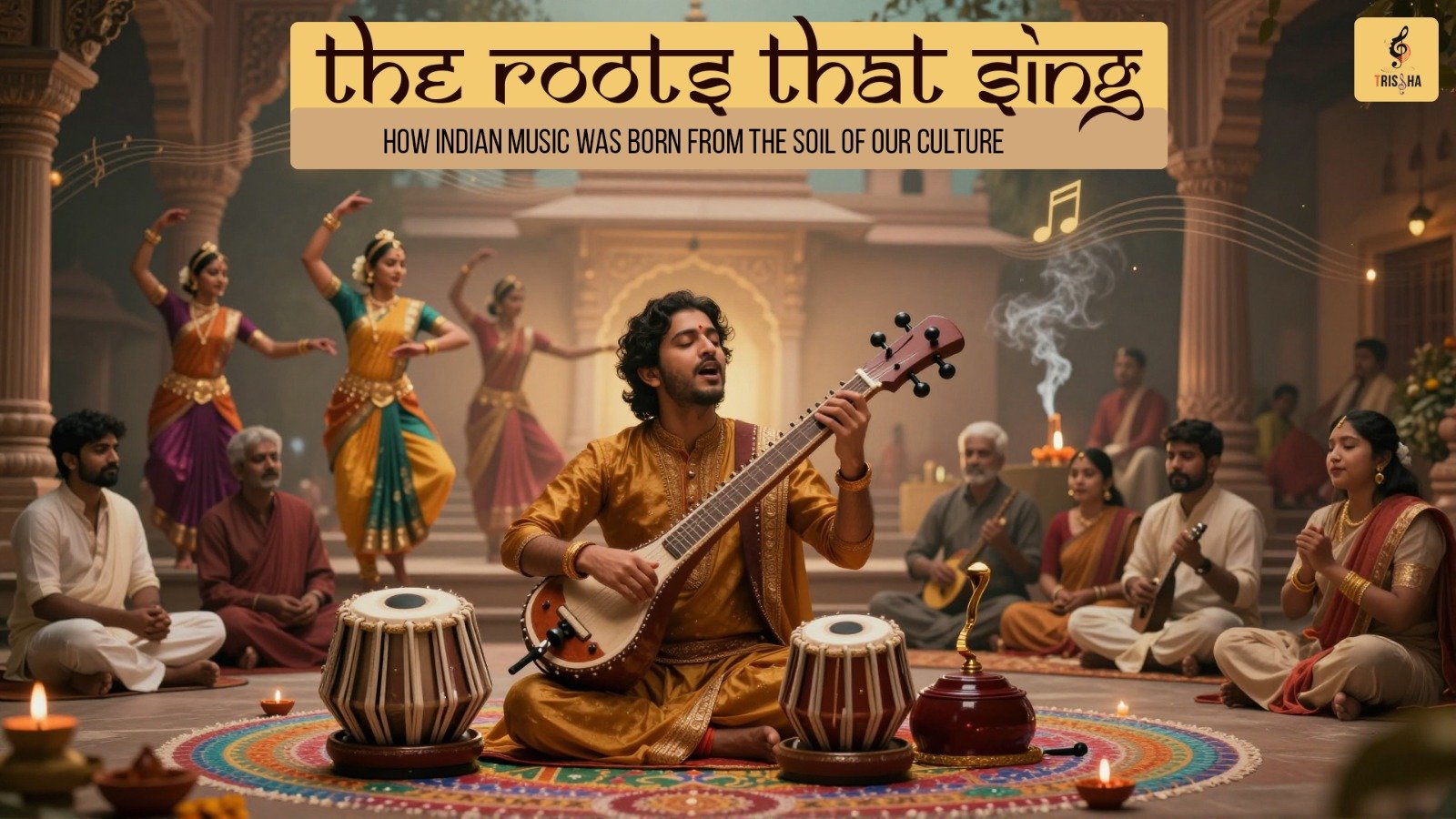
The Roots That Sing: How Indian Music Was Born From the Soil of Our Culture
There is something about Indian music that doesn't quite feel made. It feels remembered. As if it was always here, waiting in the air of a temple courtyard, in the hum of a grandmother coaxing a child to sleep, in the chants drifting out of a wedding tent at dawn. You don't always learn Indian music in the way you learn other things. More often, it learns you first.
And to understand why, you have to walk backwards in time, very far backwards, into the country's oldest scriptures.
When the Vedas Began to Sing
Most musicologists agree that Indian classical music traces its origins to the Vedic age, roughly 1500–500 BCE, when sacred hymns were not merely spoken but sung. Among the four Vedas, the Sama Veda is considered the wellspring of Indian music. According to historian-musicologists and the Hindu American Foundation, the very name Sama comes from the Sanskrit root meaning melody, and the texts of the Sama Veda were composed spec