Blog
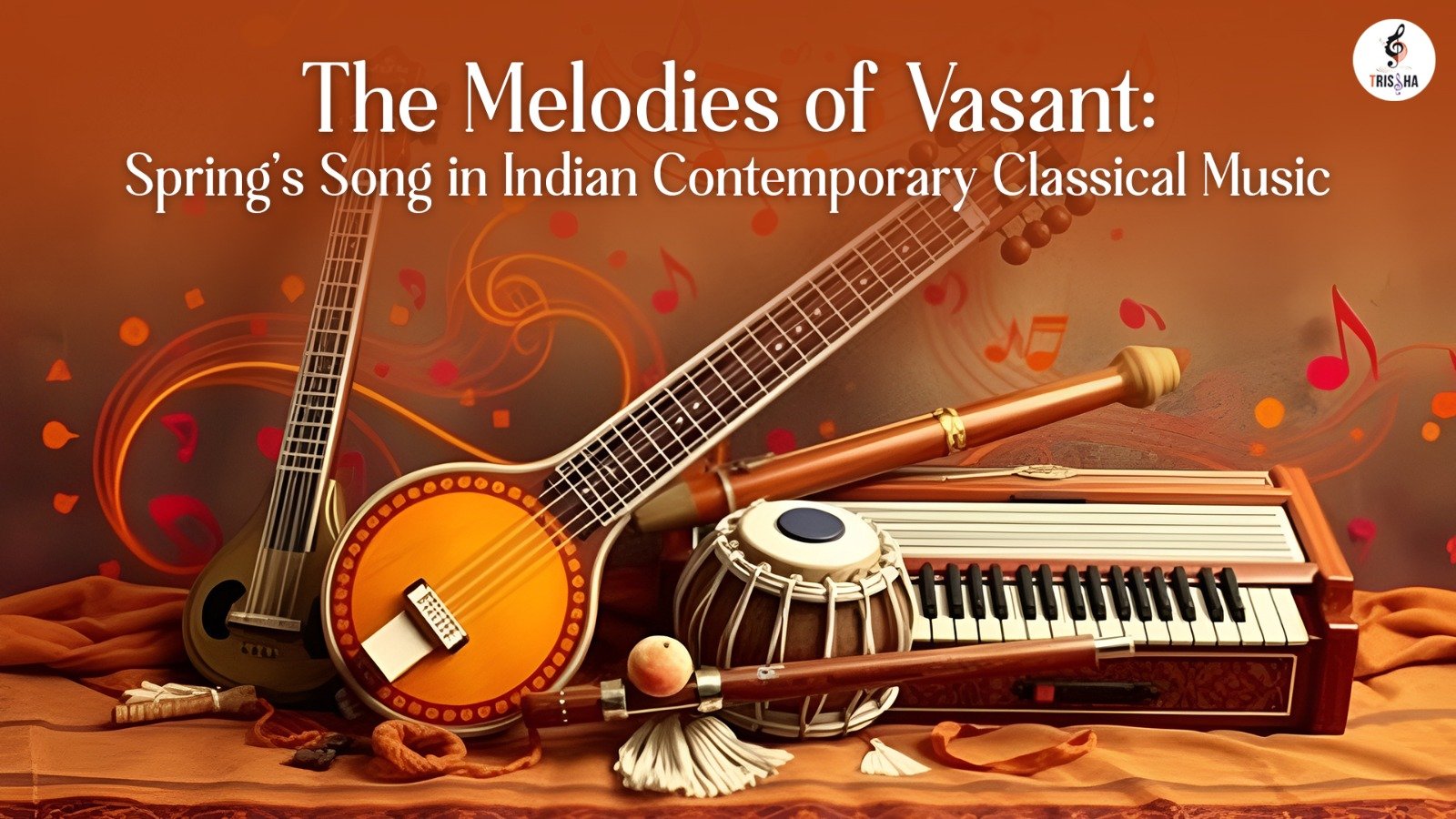
The Melodies of Vasant: Spring's Song in Indian Contemporary Classical Music
In Indian classical music, Vasant—or Basant—captures the essence of spring, blending ancient raga traditions with modern interpretations. This vibrant raga evokes blooming flowers, playful breezes, and renewal, thriving in contemporary performances by fusion artists and digital platforms.
Origins of Raga Vasant
Raga Vasant belongs to the Hindustani classical tradition, primarily under the Kafi thaat, though some variants align with Khamaj. Its scale features notes like Sa Re Ga Ma Pa Dha Ni Sa in ascent (arohana), with subtle meends and gamaks mimicking nature's sway. Traditionally performed during the afternoon of Vasant Panchami, it honors Saraswati, goddess of arts, infusing joy (shringara rasa).
Composers like Vishnu Narayan Bhatkhande classified it among spring ragas, alongside Bahar and Basant Mukhari, emphasizing its bright, optimistic swaras. In Carnatic parallels like Vasantha Bhairavi, it shares melodic contours but diverges in phrasing.
Characteristics and Structure
Vasant's arohana is Sa Re Ga Ma Pa Dha Sa, while avarohana allows fluid descent: Sa Ni Dha Pa Ma Ga Re Sa. Vadi (king note) Ga and samvadi Ni create a sense of uplift, with pakad phrases like Ga Ma Pa Dha Pa Ma Ga.
Performers highlight kan swaras (auxiliary notes) on Dha and Ni for emotional depth, often in Teentaal or Ektaal cycles. Instruments like sitar, sarod, and shehnai amplify its festive vibe—Ustad Bismillah Khan's renditions evoke temple festivities.
Contemporary Interpretations
Today's artists fuse Vasant with global sounds, expanding its reach. Santoor maestro Pt. Shivkumar Sharma's "Seasons: Vasant" album reimagines it instrumentally, blending classical purity with subtle Western harmonies. Violinist Kala Ramnath weaves South-North gharana elements, as in her 2025 YouTube performance, bridging traditions for urban audiences.
Film composer Vasant Desai popularized semi-classical Vasant strains in songs like those from Shantaram films, merging bhajans with mass appeal—sarangi and saxophone twists in Raag Jayant Malhar tracks. Digital platforms now host live streams, with AI-enhanced visuals syncing ragas to animations of spring landscapes.
Iconic Performances and Artists
Ustad Rashid Khan's vocal explorations showcase Vasant's alaap-jor-jhala progression, while Pt. Vishwa Mohan Bhatt's Mohan Veena adds slide-guitar flair. Albums like "Seasons: Vasant" feature Pt. Jitendra Abhisheki's thumris, evoking Holi revelry.
Festivals such as Vasant Utsav feature ensemble renditions—Bhairav Bahar hybrids with folk dholak rhythms. Young creators on YouTube remix Vasant with electronica, gaining millions of views among diaspora youth.
Instruments and Accompaniment
Sitar and sarod lead melodic lines, with tabla providing rhythmic anchor—Teentaal's 16 beats suit Vasant's lilting gait. Harmonium sustains drones, while pakhawaj offers robust bass in Dhrupad styles. Contemporary setups include bansuri flutes for airy breezes or konnakol percussion for Carnatic twists.
Tanpura's steady Sa-Pa undertone grounds the raga, preventing drift into lighter modes like Pilu.
Cultural Significance Today
Vasant transcends concerts, inspiring wellness apps with raga therapy tracks for seasonal affective relief. In Bengal, tied to your music curation roots, it pairs with Rabindra Sangeet spring motifs, fueling Instagram reels and YouTube essays.
Bollywood nods, like in modern soundtracks, keep it alive—think Holi playlists blending Vasant with pop. As climate shifts challenge seasonal cues, Vasant symbolizes resilience, urging musicians to innovate.
Future of Vasant in Fusion
Emerging artists experiment with synths and loops, as in Spotify's classical-electronica playlists. Collaborations with international jazz violinists promise hybrid Vasants, while VR concerts immerse global fans.
This raga's adaptability ensures its bloom in Indian contemporary classical music, a perennial spring in sound.