Blog
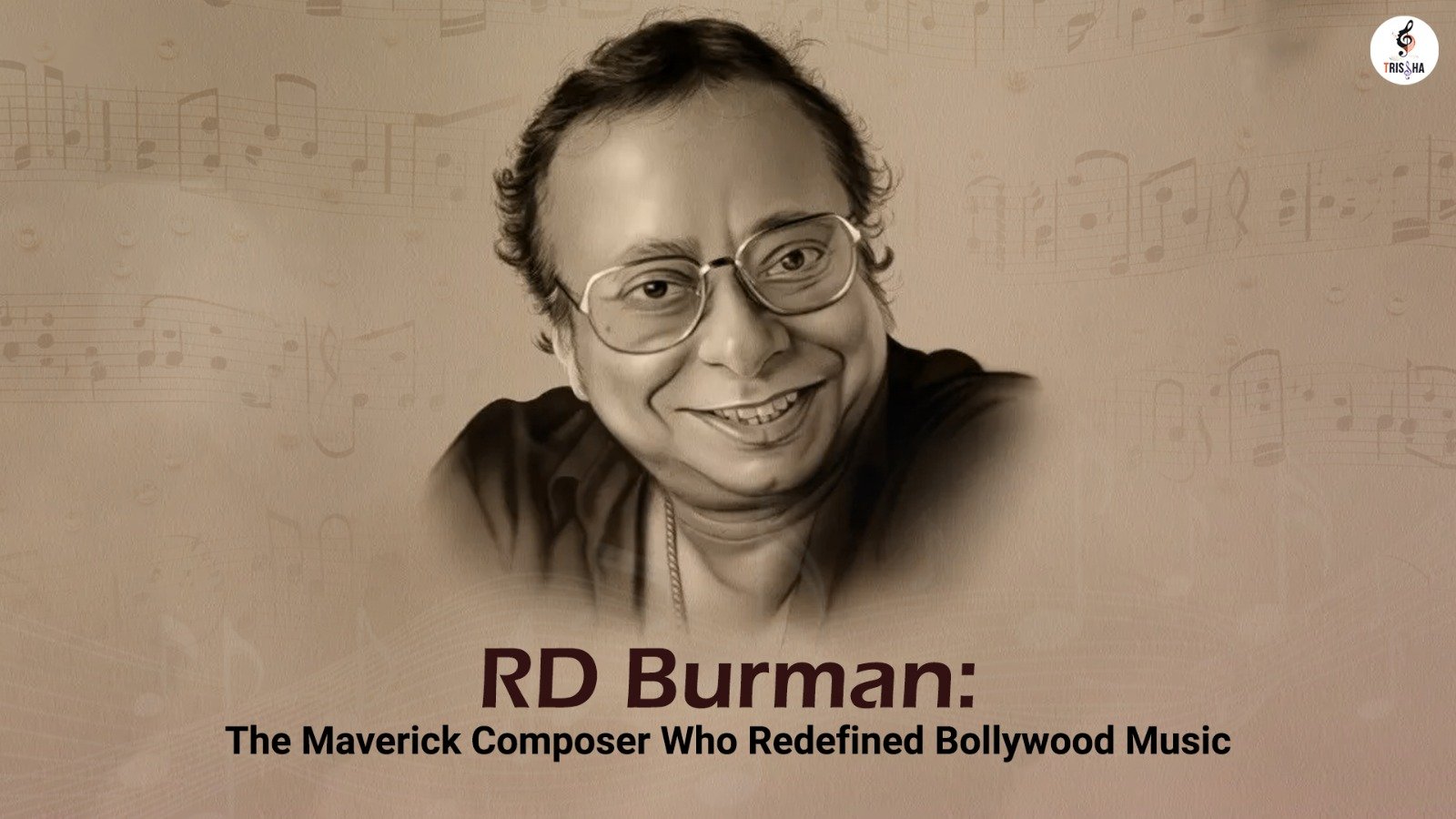
RD Burman: The Maverick Composer Who Redefined Bollywood Music
R.D. Burman, or Pancham Da, transformed the sound of Indian film music by blending Indian melody with global rhythms, modern recording techniques, and bold experimentation. His contributions shaped Bollywood music from the 1960s to the 1990s and continue to influence composers, singers, and music producers even today.
RD Burman: Architect of Modern Bollywood Music
Rahul Dev Burman was born on 27 June 1939 to legendary composer S.D. Burman and became one of the most prolific and influential music directors in Hindi cinema. Between the early 1960s and the early 1990s, he composed music for around 331 films, making him a central figure in the evolution of Bollywood film songs. For anyone exploring “RD Burman's contribution to Indian music” or “history of Bollywood music composers”, his name emerges as a defining presence.
Known popularly as Pancham Da, he moved Hindi film music away from purely orchestral or classical structures towards a more youthful, urban, and contemporary sound. His work became a benchmark for “modern Bollywood music”, a keyword that still dominates discussions on retro Hindi songs and classic film soundtracks.
Fusion of Indian Melody and Western Sound
One of RD Burman’s greatest contributions to Indian music was his fearless fusion of Western genres with Indian melodies. He drew from jazz, rock, disco, funk, Latin, and electronic music and blended them with Hindustani classical, Bengali folk, and traditional filmi tunes. Songs like “Dum Maro Dum” from Hare Rama Hare Krishna brought psychedelic rock into Hindi film music, while “Mehbooba Mehbooba” in Sholay showcased Middle Eastern and folk influences over a driving beat.
He used instruments like electric guitar, synthesiser, harmonica, brass sections, and drum kits at a time when such sounds were rare in mainstream Indian film scores. The iconic opening of “Chura Liya Hai Tumne Jo Dil Ko” with clinking glasses and guitar is often cited as an example of his innovative sound design and studio creativity. For music producers and arrangers searching for “Bollywood sound design history” or “RD Burman innovative instrumentation”, his catalogue is a ready-made case study.
Shaping Stars and Defining Eras
RD Burman played a crucial role in defining the careers of several major stars and playback singers in Indian cinema. While assisting his father on Aradhana (1969), he was instrumental in making Kishore Kumar the primary playback voice for Rajesh Khanna, which changed the soundscape of Hindi film music in the 1970s. This partnership gave audiences a string of evergreen hits and cemented the linkage between “RD Burman songs” and “Kishore Kumar classics”.
The year 1975 marked his peak, with landmark soundtracks for films like Sholay, Deewaar, Khel Khel Mein, Aandhi, and Khushboo. These albums combined chart-topping songs with strong background scores, proving his command over both film songs and cinematic mood-building. His long-running collaboration with Asha Bhosle produced some of the most sensuous and rhythmically adventurous songs in Bollywood, further strengthening his image as a trendsetter.
Innovation, Rhythm, and Recording Techniques
Another major contribution of RD Burman to Indian music was his approach to rhythm, arrangement, and recording-room experimentation. He treated the studio as a creative laboratory, using everyday objects, unusual percussive textures, and layered arrangements to build a distinctive sonic signature. This focus on the “sound” of a song—its groove, mix, and timbre—helped shift Hindi film music toward a more production-driven aesthetic that resonates with today’s digital era.
He also worked closely with top instrumentalists like Hari Prasad Chaurasia, Shiv Kumar Sharma, and Kersi Lord, integrating flute, santoor, keyboards, and brass into rich, genre-blending arrangements. His background scores and title themes often carried strong motifs, influencing how background music is conceived in Indian cinema. For composers and students searching “RD Burman arrangement style” or “Bollywood rhythm innovation”, his work is still a masterclass.
Lasting Legacy in Indian and Global Music Culture
Decades after his death on 4 January 1994, RD Burman remains a cult figure whose music is continuously remixed, covered, and reinterpreted. From club remixes of his disco and funk-inspired tracks to unplugged renditions of his romantic songs, Pancham Da’s catalog is central to “retro Bollywood hits” and “evergreen Hindi songs” playlists. Many modern composers, from Jatin–Lalit in the 1990s to A.R.
Rahman and later fusion and electronic artists, acknowledge his influence on their musical thinking.
His ability to stay rooted in Indian melody while embracing global soundscapes made him a bridge between traditional film music and contemporary pop sensibilities. For anyone researching “RD Burman impact on Indian music” or “evolution of Bollywood film music”, his career stands as proof that innovation, risk-taking, and emotional simplicity can coexist in one timeless body of work.