Blog
India's Musical Journey Across Regions
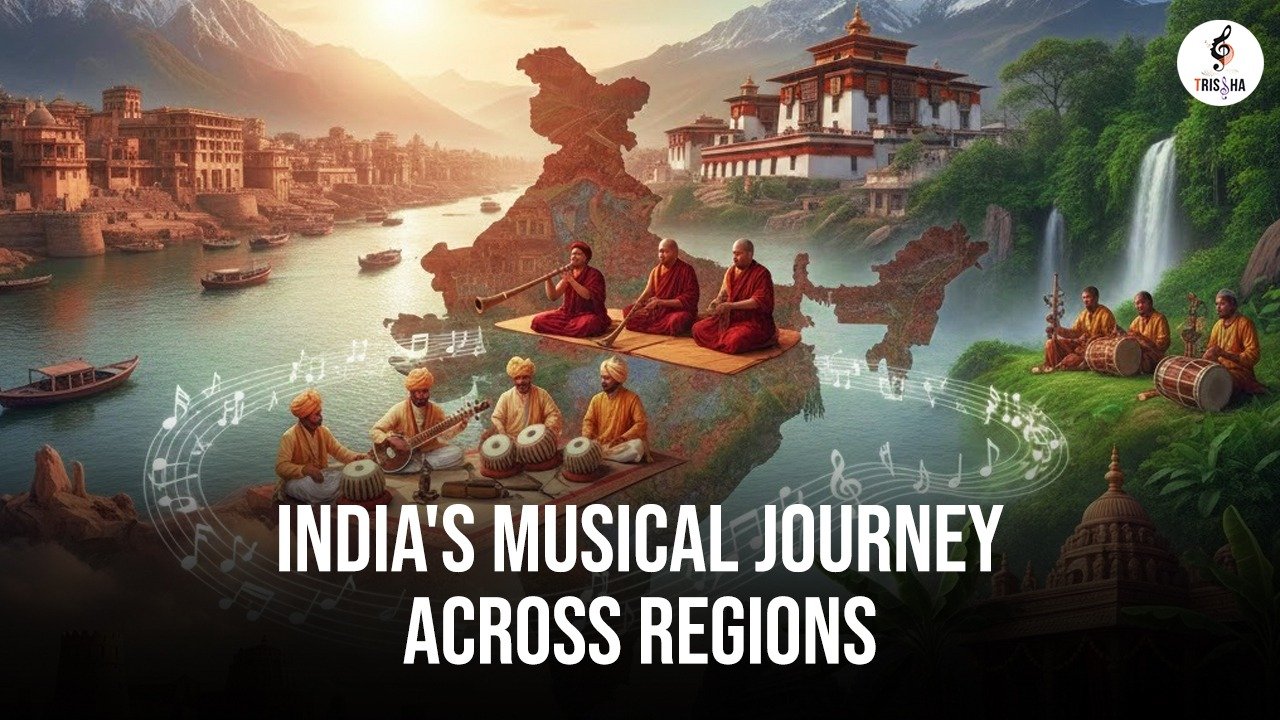
India's musical heritage is a vibrant mosaic, shaped by geography, history, and culture, with distinct patterns evolving from the eastern hills to western deserts and northern plains to southern coasts. These regional shifts reflect adaptations in rhythm, melody, and instruments, blending ancient traditions with invasions, migrations, and modern fusions.
Northern Foundations
Hindustani classical music dominates northern India, rooted in Vedic chants and refined during the medieval era under Mughal patronage. Ragas here emphasize improvisation, emotional depth (bhava), and subtle microtones (shrutis), often performed with sitar, sarod, or tabla. Gharanas like Gwalior or Kirana added stylistic flair, incorporating Persian influences such as faster taans and lighter rhythms post-13th century.
Folk forms vary: Punjab's bhangra pulses with energetic dhol drums for harvest celebrations, while Rajasthan's desert ballads (maand) use sarangi for melancholic tales of valor. Bhajans from Uttar Pradesh draw on Sufi qawwalis, blending devotion with rhythmic claps.
Southern Purity
Carnatic music thrives in the south, preserving pre-Islamic purity through temple traditions and composers like Tyagaraja or Purandara Dasa. It prioritizes complex talas (up to 108 beats), intricate swaras, and layered vocals with violin or veena, focusing on precision over Hindustani's fluidity. The 7th-century Bhakti movement systematized these, insulating them from northern invasions.
Regional folk mirrors this: Tamil Nadu's oppari laments funerals with mournful rhythms, while Kerala's sopana uses edakka drums for temple rituals. Andhra's burrakatha storytelling fuses song and percussion, evoking epic narratives.
Eastern Melodies
Eastern India's patterns infuse mysticism and nature, with Bengal's baul songs—UNESCO-recognized—melding folk mysticism via ektara and dotara for spiritual quests. Assam's bihu dances to pepa horns during harvests, while Odisha's odissi-linked folk uses mardala drums for lyrical devotion.
Rabindra Sangeet from Bengal revolutionized the east, blending classical ragas with poetic humanism, influencing jhumur of tribal hills. These forms emphasize elongated vowels and gamakas (oscillations), contrasting the north's precision.
Western Vibrancy
Western India pulses with maritime and pastoral energy. Gujarat's garba and dandiya during Navratri whirl to dhol and turbaned vocals, evolving into pop fusions. Maharashtra's powada glorifies warriors with sambal drums, while Goa's mando reflects Portuguese Konkani tunes with guitars.
Rajasthan's manganiyar ballads, sung by Manganiyar communities, layer voice over algoza (double flute), adapting to arid life's resilience. These boast robust rhythms and call-response, differing from east's introspection.
East-West Shifts
Moving east to west, music transitions from ethereal, nature-infused melodies to grounded, rhythmic exuberance. Eastern bauls prioritize philosophical drone and minimalism, while western garba explodes in communal dance beats—Persian sargam notes yield to folk hybridity. Mughal syncretism softened northern elaboration into western populism.
North-South Evolutions
North-south divides crystallized post-13th century: Hindustani absorbed Arabian taans and harmony hints, becoming improvisational; Carnatic stayed devotional, talas rigid, gamakas ornate. Folk follows: northern Sufi-infused qawwalis loosen rhythms southward to villupattu's narrative chants.
Modern Fusions
Bollywood and streaming now blur lines—northern filmi ghazals mix with southern item numbers, global electronica fuses ragas (e.g., sitar-EDM). Yet regional cores persist, as diaspora revivals sustain purity amid urbanization.